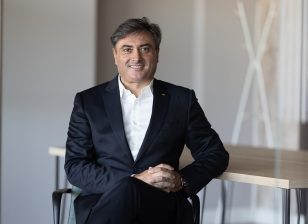



Medicover: The Future of Private Healthcare Is Managing Complex Cases
Romania’s private healthcare market is entering a more mature phase, where rapid access to consultations and geographical expansion are no longer enough to differentiate providers. Investments in advanced technology, medical teams and integrated care models are becoming increasingly important as patients seek comprehensive solutions for complex conditions. Dr. Florinela Cirstina, General Director of Medicover Romania, addresses the company’s key growth drivers, changing patient expectations, the role of digitalization and the trends that will shape Romania’s private healthcare market over the next 3–5 years.
The current context of the healthcare market in Romania
Romania allocates approximately 6% of its GDP to healthcare, compared to a European average of over 10%. This difference puts pressure on the entire system and the private sector has offered a serious alternative in this regard.
The development of the private sector is also the result of substantial investments in infrastructure, technology and medical training. In recent years, private operators have built hospitals, opted for state-of-the-art equipment and created competitive working conditions for medical teams, actively contributing to the modernization of medical services in Romania.
Initially, the private sector developed in the area of accessible and relatively standardized services: consultations, tests, imaging. An important driver was the corporate environment, which began to offer medical benefits to employees, but also the formation of a middle class that understood that health is an investment, not just a reaction to an emergency.
Today, the market is in a different stage. The aging population and the increase in the incidence of chronic diseases, especially oncological and cardiovascular diseases, are changing the patient profile. We are no longer talking only about quick access to a consultation, but about managing complex cases that require multidisciplinary teams, advanced technology and continuity of care.
In this context, competition in the private sector is no longer about geographical coverage or volume, but about the ability to offer complete treatment to the patient, in a coherent and sustainable system. We are seeing an increasingly clear shift towards integrated care models, which offer long-term financial and medical predictability, a sign that the market is maturing and that patients are looking for comprehensive solutions.
Medicover’s main growth drivers
Our growth engines are primarily structural.
We are seeing a clear shift in demand towards complex cases. We are no longer talking only about routine tests or consultations, but about cancer patients, complicated cardiovascular cases, endometriosis, chronic obesity, pathologies that in the past were frequently referred to clinics in Western Europe. The ability to treat these cases in Romania, with multidisciplinary teams and appropriate technology, is a responsibility that we have taken on and in which we have invested constantly.
The second driver is technology. Investments in robotic surgery, for example, do not only mean high-performance equipment, but also better clinical results, faster recovery, and fewer complications. At Medicover Cluj Hospital alone, 412 robot-assisted surgeries were performed last year, which shows that we are talking about a mature program with experienced teams. For patients and the doctors who refer cases, this experience makes all the difference.
A third driver is our operational capacity to scale. Digitalization and standardization of processes allow us to grow without compromising on quality. A well-designed digital pathway means faster access to the right doctor and more efficient use of existing infrastructure.
The corporate segment remains important because it facilitates access to the private system. But patient loyalty comes from clinical experience and the trust we build over time.
Changes in patient behavior in the recent years
In recent years, patients have changed noticeably. If in the past they would come with a problem and wait for a diagnosis and solution, today they come much better informed, sometimes with accurate medical information, other times influenced by myths or incomplete interpretations from the online environment. What is certain is that patients have researched, discussed, often already undergone investigations and want to understand, not just receive a recommendation. A patient involved in the decision is more likely to follow the treatment correctly and return for check-ups. At the same time, this requires a different type of communication and a more mature relationship between doctor and patient.
A second important change relates to fragmentation. Patients no longer accept uncoordinated medical pathways, where each specialist treats only part of the problem. Especially in complex pathologies, there is a demand for teams that collaborate and for an integrated approach, where someone is responsible for the whole picture.
From an operational perspective, we are seeing a clear increase in interest in minimally invasive solutions and modern technologies. Patients know that there are alternatives with faster recovery times and fewer complications. If these options are not available locally, they are willing to look elsewhere. This behavior requires us to constantly invest in technology and team training in order to respond appropriately to these expectations.
The future of private healthcare market in Romania
Over the next 3–5 years, I believe that differentiation in the private healthcare market will no longer be primarily linked to price or geographical coverage, but to the actual ability to manage complex cases, from diagnosis to treatment and monitoring.
The operating costs for a modern hospital – equipment, infrastructure, team training – are high and will remain high. Therefore, we are likely to see market consolidation through acquisitions and partnerships. Not all operators can sustain the investments needed to remain competitive in the area of complex pathology in the long term.
At the same time, the biggest challenge remains human resources. The shortage of doctors and qualified staff cannot be resolved quickly. Organizations that consistently invest in real-world practice conditions – relevant case studies, appropriate technology, and professional autonomy – will have a long-term advantage.
Another important element will be the relationship with the public system. Chronic, oncology, or elderly patients need continuity between the two systems. I believe that in the coming years we will see increasing pressure for clear collaboration and better integrated pathways, so that patients no longer have to navigate between the public and private sectors on their own.
The role of digitalization and process automation in increasing internal efficiency and differentiating the patient experience
Digitalization only makes sense if it frees doctors from administrative tasks and allows them to spend more time with patients. For me, that is the goal. If a doctor wastes tens of minutes every day on paperwork, that time is lost from medical care. At the network level, the impact becomes significant.
For the patient, the difference is not just the ability to make an appointment online. The expectation is continuity: not having to repeat the same information at each consultation, having the results available to the right doctor at the right time, and having a clear medical pathway. When the doctor already has the complete investigations and history, the patient’s experience is different and safer.
Digitalization in healthcare is not a simple process. The technology exists, but implementation requires adaptation and discipline in its use. It is an organizational effort, not just a technical one. At the same time, automation can help in repetitive areas – scheduling, notifications, reporting, image processing – but clinical decisions remain the responsibility of the physician.
Geographical and service expansion
Our expansion strategy focuses on clinical relevance. We do not open locations just to cover a geographical area, but we analyze where there is a real need for complex services that are currently unavailable locally or cause patients to travel to other cities or abroad.
In terms of services, the direction is clear: developing specialties that address complex pathologies, urology and robotic surgery, interventional cardiology, integrated oncology and women’s health in a multidisciplinary approach. These are areas where the need is obvious and where infrastructure and teams can significantly change the patient’s journey.
Investments made in recent years, amounting to over 150 million EUR and creating a capacity of nearly 900 beds, have laid the necessary foundations. The next step is to strengthen the teams and develop case studies at the level for which this infrastructure was built.
The biggest challenge lies in training and retaining a medical team that wants to stay and grow professionally. This is the real constraint of any development strategy at the moment.