


Romanians' health, between perception and reality: 10% increase in the impact of chronic diseases Accessibility to family doctors has decreased
Romania is facing a noticeable discrepancy between the population’s perception of their own health and objective indicators of the healthcare system. Although more and more Romanians say they feel healthy, data show an unfavorable trend in key health indicators, such as the impact of chronic diseases, addressability to primary medicine and the number of healthy life years, according to an analysis conducted by the BUCHAREST CENTER FOR ECONOMY & SOCIETY (CES Bucharest) based on publicly available data.
The impact of chronic diseases is increasing
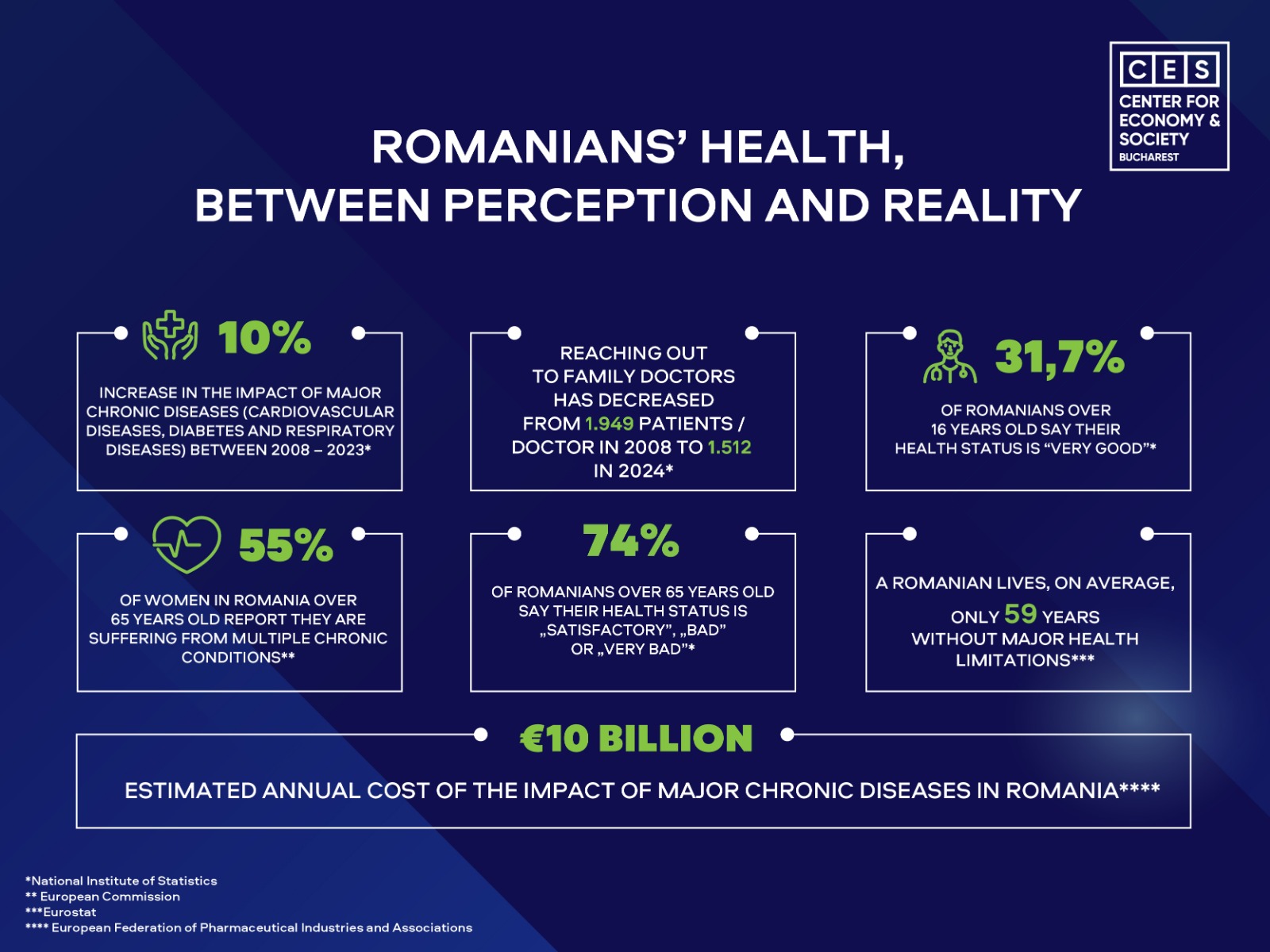
Between 2008 and 2023, the mortality rate caused by major chronic diseases (cardiovascular diseases, diabetes, and respiratory diseases) increased by approximately 10%, from 743,7 to 818,2 deaths per 100.000 inhabitants, according to data from the National Institute of Statistics, analyzed by CES Bucharest.[1]
The increase is all the more worrying given that these conditions are largely preventable or manageable through early diagnosis and constant monitoring.
The most rapid increase is observed in respiratory diseases, where the mortality rate doubled between 2008 and 2023: from 54,6 deaths per 100.000 inhabitants in 2008 to 112,9 in 2023, according to the data analyzed. This trend indicates not only the cumulative effects of risk factors, but also the lack of early detection and management of these conditions.
During the same period, the diabetes-related mortality rate increased by more than 50%, from 9,8 to 15 deaths per 100.000 inhabitants. In the case of cardiovascular diseases, although the percentage remained relatively stable, the number of deaths increased in absolute terms, with these conditions remaining the leading cause of death, with 690 deaths per 100.000 inhabitants in 2023.
Decreased accessibility to family doctors
A key indicator that may explain these developments is the decline in the number of visits to family doctors. The average number of residents returning to their family doctor within a year has decreased from 1.949 people per doctor in 2008 to 1.512 in 2024.[2]
This trend suggests a reduction in preventive check-ups, late diagnosis of chronic diseases, and a weaker relationship between patients and the primary care system.
In the absence of constant interaction with the healthcare system, diseases evolve silently, and patients only reach the system in advanced stages, thus generating much higher social and financial costs.
In Romania, the total annual cost estimated as the direct impact of a group of five major chronic diseases (stroke, ischemic heart disease, type 2 diabetes, chronic obstructive pulmonary disease, and breast cancer) is over 10 billion EUR, including direct medical expenses, productivity losses, and socio-economic impact, according to the latest report by the European Federation of Pharmaceutical Industries and Associations.[3]
Romanians say they feel better
Data on the self-reported health status of people over 16 years old show that between 2015 and 2024, the percentage of those who report feeling in very good health increased from 26,7% to 31,7%, while the percentage of Romanians who say their health is good has remained constant at approximately 43%.
Also, the share of people reporting poor or very poor health decreased from 8,5% to 5,4%, suggesting a generally favorable perception of their own health[4].
Population aging and the burden of multiple diseases
Approximately one-third of Romanian men over the age of 65 and over 55% of women in the same age group report suffering from multiple chronic conditions, according to a European Commission report.[5]
Only 1,9% of Romanians over the age of 65 report being in very good health, and nearly 74% self-report being in “satisfactory” to “poor” or “very poor” health”[6].
At the same time, a Romanian lives, on average, only 59 years without major health limitations, 10 years less than an Italian (69 years) and 4 years less than a Pole, according to Eurostat[7].
Become a CES Bucharest member
A better future is everyone’s business. Be part of that change!
SEE MEMBERSHIP PACKAGES
or call +40 723 260 790
MY CES
Subscribe to CES Newsleeter to receive research news & updates
By clicking ‘Subscribe’ you agree to our Terms of Use . For further information about how the CES Bucharest processes your personal data, please click on our Privacy Policy .